Posts

Iran turns to Gulf neighbours for new gas export contracts
Image
Iran is signing gas export deals throughout the Gulf as it gets its energy sector back on track after years of neglect. The latest deal, signed on Thursday, will see Iran export a small volume of CNG to Abu Dhabi from the port of Assaluyeh, via private companies rather than state-owned entities. The volumes are unknown, but Iranian energy expert Dalga Khatinoglu has said they will be small, as Iran has a total production capacity of 19 million cubic metres (MMcm) of CNG per day, which is expected to grow to 30 MMcm/d in the coming year. However, almost a quarter of private vehicles in the country rely on CNG for fuel, and that number is planned to rise to 35% by 2020, so Iran will not "have significant surplus" to export in the medium term. High domestic consumption and the $200 billion investment requirement to reboot Iran’s energy sector mean exports are a fraction of what they could be. But huge demand for energy in Oman, the UAE and Iraq make them prime – and e...

Doubling gas storage in Iran

Image
Regarding the six-fold deference between Iran's housing gas consumption in summer and winter which uses about 40 percent of the country's total gas consumption, Iran vitally needs to boost gas storage capacity. Iran consumed 91 billion cubic meters (bcm) of natural gas in its housing sector last year, 2.1 bcm more than the previous year. The housing sector's gas consumption in some weeks of summer was a little more than 100 million cubic meters per day (mcm/d) while in some weeks of winter it exceeded 650 mcm/d. Winter’s high consumption rate in the housing sector creates gas shortages that force the country to cut gas delivery to power plants and industrial sector as well as re-injecting to old oil fields dramatically. The country has two gas storage facilities, Shourijeh and Serajeh. Iran injected about 2 billion cubic meters of natural gas (bcm) to these storage facilities last summer and re-extracted 7.5 mcm/d during winter (1.021 bcm in total). Now, Manou...

Iran leaps to minimize liquid fuel usage in power plants

Image
Supplying liquid fuels to Iran's power plants decreased 2.5 times during last 45 days to 10 million liters per day. Director of the supply and distribution division at NIOPDC, Hossein Aghayan told Shana May 13 that during the last four days, Iran supplied 3 million liters of fuel oil as well as 7 million liters diesel to power plants respectively. During Iran’s last fiscal year, which ended March 20, liquid fuels burning in the power sector also increased dramatically. The country increased gas supply to power plants by 33.6 percent to about 49 billion cubic meters per annum (bcm/a) and decreased fuel oil and gasoline consumption by 32.6 percent to 28.1 million liters per day and 24.2 percent to 25.3 million liters per day in last fiscal year. Iran is to increase natural gas delivery to power plants to 57 bcm in current year. Iran reportedly increased gas production capacity by 100 mcm/d last year and wants to increase the volume in same pace during the current year. H...

Global zero CO2 plan and Iran

Image
Amid warnings that levels of global greenhouse gases are rising The World Bank released a report aimed at eliminating net CO2 emissions by the year 2100. Entitled the “Three Steps to a Zero-Carbon Future,” The World Bank published the report on May 11. According to the report, the net emissions is needed to reach zero by 2100 to stabilize climate change around the 2°C as the maximum acceptable amount of warming. The report states that the cumulative emissions of 3,000 gigatons of CO2 (GtCO2 ) would lead to a temperature increase of between 1.0°C and 2.5°C. In 2014, the total CO2 emission amount stalled at about 32 GT, unchanged from 2013, the International Energy Agency reported in mid-March. Carbon dioxide (CO2) shares 57 percent of total global greenhouse gas emissions, while the share of power plants in CO2 emission is very high. The World Banks report doesn't mention the details of each country's share in emission, but Iran has among high producing CO2 per ...

LNG option for Iranian gas export to EU

Image
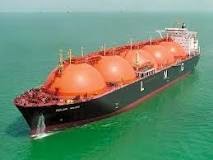
During his visit to Germany Iran's oil minister said that exporting gas through Turkey to the EU is not Iran's priority. Bijan Namdar Zanganeh said on May 7 that "gas prices were too low in Europe and transporting gas there from Iran faces legal obstacles and costly fees. For example, if Iran wanted to export gas to Europe, it would likely go through Turkey, where it could be subject to transit fees". During last month, as hopes for elimination of sanctions imposed on Iran have risen due to progress in the nuclear talks, estimations of joining Iranian gas to the Trans Anatolian Pipeline to be delivered to EU by Trans Adriatic pipeline were lauded. Iran possesses 33.8 trillion cubic meters of gas reserves, making it number one in the world, while the country wants to increase gas production from current 660 million cubic meters per day (mcm/d) to about 1,100 mcm/d by 2019. However, Zanganeh said, "Another option for Iran’s gas export to EU is liquefyi...

Potential routes for delivering Turkmen gas to EU

Azerbaijani, Turkish energy ministers, as well as European Commission Vice President Maros Sefcovic have discussed the gas delivery options with  Turkmenistan  in Ashgabat. They signed an energy declaration on May 1th. During last two days, two options for transiting Turkmen gas towards EU were announced by Sefcovic: Transferring through  Iran , and building underwater Trans Caspian pipeline. On May 1st, Sefcovic said that he has discussed the possibility of transiting  Turkmenistan ’s gas via  Iran  with the Central Asian state’s leader Gurbanguly Berdymukhamedov. The following day, in an interview with Reuters, he said “we discussed all aspects referring to the trans-Caspian pipeline… We made a big step in the strategic direction”. Transferring Turkmen gas through  Iran Iran  is ready to ensure transit for transporting Turkmen energy resources, particularly, oil and gas to the third countries, Iranian President Hassan Rouhani ...

A glance at Iran's real non-oil trade

Image
Iran Custom Administration says the country's non-oil export decreased by 7.7 percent to $2.731 billion, while imports plunged 8.23 percent to $1.971 billion during last Iranian calendar month (March 21 to April 21). The report, released on May 1 put gas condensate in export items. Gas condensate, also known as ultra-light oil- shares about one fourth of the country's total non-oil exports. The latest statistics released by Trade Promotion Organization of Iran (TPOI) indicates that the total amount of Iran's non-oil exports during last fiscal year was $61,760 billion, about 20 percent more than the previous year. A glance on the details of this report shows that oil-related raw commodities have a huge share in the total "non-oil" exports. For instance, gas condensate export increased by 36 percent to above $14 billion during the last fiscal year. Or, the value of propane, butane, methanol, polyethylene and bitumen exports was about $8 billion, whi...