Posts

Iran loses both in oil and oil product revenues

Image
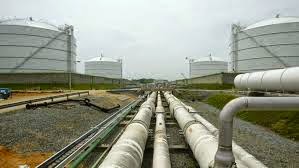
Although Iran boosted exporting its oil products, but a look at the country's oil production revenues during the last several months indicate a huge drop in prices. Iran's most valuable exported oil products include propane, butane, tar, fuel oil as well as some petrochemical products. Iran's heavy oil price has fallen from about $110 in mid-June to below $68 currently. The country exported about 1.2 to 1.25 million barrels of crude oil and condensate per day in average during ten months of 2014. This figure during 2011 and 2013 was about 2.5 million and 1.07 million barrels per day. Iran's petroleum export revenues ($ billion) based on the Central Bank of Iran's statistics Iran's Custom Administration's latest monthly report, released on Dec.5 indicates that the country's oil product exports have soared since March 21, when Iran's current fiscal year started, but their price has dropped significantly during the last several months as ...
Recession in Iran's profitable CNG market

Image
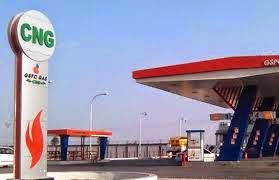
Compressed Natural Gas sharing 5 percent of the country's gas consumption and 25 percent of the National Iranian Gas Company's revenues has faced a recession during the last few years in Iran. Amir Vakilzadeh, the National Iranian Oil Refining and Distribution Company's director for CNG plans told the Oil Ministry's information website Shana on December 2 that some 2,249 CNG stations in the country are active and the government has plans to encourage the private sector to get involved in CNG projects. The number of CNG stations during last two years increased by 50 percent in Iran, while the consumption rate has not changed. Iranian cars consumes about 20 million cubic meters of CNG per day, equals usage of daily 20 million liters of gasoline. According to NIORDC's annual statistics, Iran's CNG consumption in the fiscal year, corresponding to 2012 was 19 million cubic meters per day (mcm/d), so there hasn’t been any significant increase in Iran's ...

Extreme fluctuations return to Iran's Forex market

Image
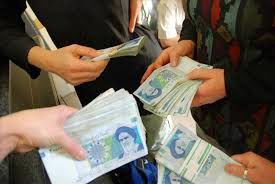
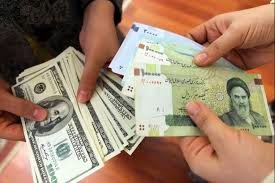
Iran's national currency has lost about 9 percent of its value versus the US dollar during the last week. Today, each US dollar is sold at 35,200 rials in the Iran's open foreign currencies market, while the official USD rate offered by the Central Bank of Iran is about 26,846. Iranian government calculates the state foreign trade based on official USD rate, including oil revenues, non-oil export and imports. However, most of private traders have no choice, but to purchase expensive US dollar from open markets. During ex-President Mahmoud Ahmadinejad's second term, Iran's rial lost its value by about four times. Each USD was sold at 9,830 rials in 2009, but the figure reached 36, 000 in mid-2013, when Ahmadinejad was by Hassan Rouhani. During last 18 moths of Rouhani's presidency, the USD price in Iran's open markets was almost stable around 31,000 to 32,000 rials, but during last week, the rial lost its value against dollar significantly. What h...

A glance at Iran's economy during Rouhani's presidency

Image
Dropping GDP from $550 billion in 2009 to $367 billion in 2013, rising inflation rate from 12.4 percent in 2010 to 32.6 percent in mid-2013, rising liquidity by 6.5 time during Ex-President Mahmoud Ahmadinejad's 8-year presidency to mid-2013, dropping the national currency value by 3.5 times from 2011 to mid-2013, etc. These are only the "plot" of the tragedy, not the whole story of Iran 's economy during Ahmadinejad's presidency. But what has been changed during the last year and a half of Hassad Rouhani’s presidency? During his term in office, the previous president, Ahmadinejad not only called the imposed international sanctions on Iran's nuclear program "a worthless piece of paper", but his administration released economic statistics that were "mixed, delayed and fake" according to the new administration and economic experts' views. A glance at Iran 's economy during Hassan Rouhani's presidency, starting in mid...

When will Iran be able to increase gas exports?

Image
Sitting on the world’s biggest natural gas reserves, the Iranian government requested last week from Turkmenistan to increase gas delivery to Iran by 6 million cubic meters per day (mcmpd) to 30 mcmpd to avoid gas shortage in upcoming winter. It's while, the Iran's Oil Ministry stated that it is preparing the gas export to Iraq, Oman and have planned delivering gas to Europe Union. Currently, Iran exports about 8.5 bcm of gas to Turkey and imports approximately the same volume the Turkmen gas. Iran has several giant upstream projects, including the development of the worlds biggest gas field, South Pars, increasing production of associated gas and cutting a 20-mcm volume of flared gas. Iran's associated gas production level increased by 27 mcmpd and the natural gas output of South pars rose by 25 mcmpd during 2014, but the consumption level increased by 100 mcm during the past weeks compared to the last year's same period. Majid Boujarzadeh, a spokesman w...

Iran’s nuclear program: contradictions still remain

Image
Six leading states of the world have started negotiations with Iran on its nuclear issue. It has been agreed to sign a long-term nuclear deal before Nov.24, or to extend the temporary agreement. Iranian and Western representatives state that the main problem is the volume of the uranium enriched by Iran, as well as the issues related to lifting the sanctions imposed on Iran. Iran’s opportunities and demands Currently, Iran possesses 19,000 IR1 and 1,000 IR2 centrifuges and only 9,000 of them are operational. Uranium hexafluoride (UF6) gas has been pumped into these centrifuges for enrichment. Moreover, a nuclear plant with the capacity of 1,000 megawatts operates in Iran. Although the construction of Bushehr nuclear power plant started before Iran’s Islamic Revolution, Germans suspended the implementation of this project in 1979. Iran and Russia reached an agreement in 1992 to construct Bushehr nuclear power plant. The plant’s construction was resumed in 1996 and it bega...

Five points of Iran-Azerbaijan energy cooperation

Image
Iran and Azerbaijan have the potential to cooperate in the oil and gas sector, since the two countries boast huge deposits of oil and gas, and are capable to explore, produce, and export oil and gas. In October, the National Iranian Oil Company signed a memorandum of understanding in Baku to conduct exploration operations in the Caspian Sea. Iranian Oil Minister Bijan Namdar Zanganeh, accompanied by a delegation led by President Hassan Rouhani, arrived in Baku last week. In an interview with the Trend Agency, Zanganeh said in addition to the participation in the development of Azerbaijan’s Shah Deniz gas field, Tehran could cooperate with Baku in other projects. “In order of importance, cooperation in the development of Caspian Sea fields, cooperation in the establishment of a pipeline to export gas from the two countries to Europe, issues related to the underground storage of Iranian gas in Azerbaijan, transaction of oil products, and investment in other countries, are the most...