Posts

Macro figures of Iran’s new budget bill
Image
New details published about Iran's upcoming solar year budget bill which was submitted to Parliament to be ratified last week, indicate elimination of some concrete figures in the bill including the price of oil and the USD rate. Iran's Finance and Economic Affairs Minister Shamseddin Hosseini said on Tuesday that the USD rate is set on the open market and the oil price on the international one. So, setting certain figures about these in budget bill is meaningless. He said that overall numbers are written in, but not set in concrete. The Iranian government solar year will start on March 20. According to the new budget bill, an income of $31 billion crude oil exports is targeted, indicating a 39.3 per cent decrease (based on USD) compared to the current solar year. With reference to this fact that the international oil price has not been predicted to change, then the amount of crude oil and condensate exports for next solar year is aimed to be about 40 per cent les...
How much is oil recovery rate in Iran?

The Iranian deputy oil minister has announced that since 2005 the country's oil reserves have increased by 110 billion barrels due to discovered new oilfields. He has added that Iran's in-situ oil reserves stand at 800 billion barrels. Mohsen Khojastehmehr told the Mehr News Agency On February 25, that the country's recoverable oil reserves are estimated to be over 157 billion barrels. Comparing the figures for proven oil reserves and the recoverable oil reserves, it will be revealed that Iran's oil recovery factor is less than 20 percent. In other words, Iran is able to extract just 20 percent of its oil reserves. Of course, the figure varies for different oilfields, but the average figure will not exceed 20 percent. According to Iran's Fifth Five-Year Economic Development Plan, the oil recovery rate should be increased by 1 percent by implementation of enhanced oil recovery methods. Based on Iranian media reports, citing oil officials, Iran is currently experime...

Iran's USD allocations for medicine imports: numbers don't add up

Image
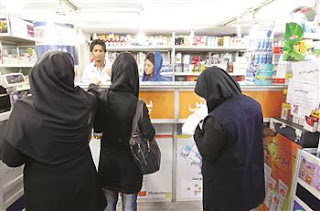
The Spokesman of Iran's Forex Center Samad Karimi said that about $3.1 billion has been allocated to medicine equipments and pharmaceutical imports during current solar year, which started on March 19, Mehr News Agency reported on Thursday. Karimi said that allocated value indicates 32 percent growth compared to last the solar year. "About $900 million through common sales and $2.2 billion through agent banks were allocated for importing medical needs," he said. He went on to say that $2.1 billion of total this value has been allocated during last 6 months. Karimi's statement came as Iranian government has been criticized due to shortage of vital drugs in the country, increasing the medicine price and avoiding to supply USD for pharmaceutical imports. Reportedly, Iran's drug shortage partly occurred because of the U.S. and EU sanctions on Iran's banking sector, which has led to cuts of payment transactions. For instance, the U.S. Commerce Department statist...

Why is Iran turning its uranium reserves into powder?

Image
Iran has officially confirmed that it turns stocks of 20 percent enriched uranium (UF6) into uranium oxide (UO2) partly to produce fuel. Iran turned a half of its 20-percent enriched 189-kilogram uranium stocks into powder last year. In May, the number of centrifuges at Iran's Fordo plant was 1,064, but in August doubled to 2,140. This means Iran's capacity for producing 20 percent refined uranium doubled. In any case, the new centrifuges installed at Fordo have not been active yet, but operating centrifuges produce 10 to 20 kg of 20 percent enriched uranium per month. Thus, 20-percent enriched uranium means that the density of the isotope U235 is 20 percent in UF6. If the density of these isotopes is over 90 percent, uranium can be used in nuclear weapons. In normal conditions, i.e. in raw uranium, the density of this isotope is 0.7 percent. Producing 5 to 6 kg of 90 percent enriched uranium from 250 kg of 20 percent refined uranium is possible, some volume that enou...

Iran-US direct talks unavoidable

Image
Following in the footsteps of several top Iranian officials, President Mahmoud Ahmadinejad welcomed U.S. Vice President Joe Biden's offer for direct talks between the two nations on Wednesday. Ahmadinejad's welcome came simultaneously with the implementation of new U.S. sanctions on Iran which were approved by the Senate and received President Barak Obama's signature on Feb.6. However, regarding a deadline on Iran's disputed nuclear program and the continued worsening of the Iranian economy, Tehran may be convinced that there is no way out except for direct negotiations with Washington. Iran, whose oil export shared 87.9 percent of total export in 2011, faced serious obstacles with both crude oil exports and revenue collection last year. According to reports, Iran's oil export halved during 2012. Iran's petroleum minister confirmed a 40 percent drop in oil revenues and a 45 percent dip in the collection of oil export incomes. Iran's national curr...

Iran’s talks with "5 +1" countries - why Kazakhstan?

Image
Kazakhstan has officially confirmed that the country will host talks on the nuclear program between Iran and the "5 +1" countries. But why Kazakhstan? Upon Iran's initiative, talks on the nuclear program were held in Turkey, Iraq and Russia in 2012. Iraq's Shiite government led by Nuri al-Maliki is a close ally of Iran. Turkey is not only a Muslim country, but also a country in non-compliance with Western sanctions, and the largest economic partner of Iran. Russia is one of the six countries (along with the U.S., Great Britain, France, China and Germany) and holds about the same position with Iran against the West. This year Iran offered to hold talks in Egypt, but the "5 +1" countries dismissed this proposal. Egypt is a Muslim country, in addition, Iran has been seeking to expand relations with the country for many years. It should be noted that there have been no diplomatic relations between Iran and Egypt for 33 years. Both countries are members...

Iran-Pak gas pipeline more achievable than TAPI

Image
The Pakistani Federal Cabinet's final approval of the Iran-Pakistan gas pipeline construction on Wednesday is a long step towards realising an Iranian gas supply to its eastern neighbour, but not necessarily against the TAPI pipeline with Turkmen origin gas. Looking at the facts that Iran's gas trade balance is negative, its new gas extraction projects have faced long delays and also the rate of gas consumption in the country is faster than the gas production rate, it seems that buying gas from Iran is more beneficial for Pakistan. Firstly, the gas delivery was scheduled for 2015. Iranian giant South Pars gas field has five phases including 12, 15, 16, 17 and 18 and with an above 70 per cent progress would come on stream in next few years. The amount of Iran's first stage gas delivery has been set at only 7.8 bcm per year. This volume equals to one South Pars phase's production level. On the other hand the costs of construction on the Iran-Pak Pipeline (Peac...