Posts

Iran-Pak gas pipeline more achievable than TAPI
Image
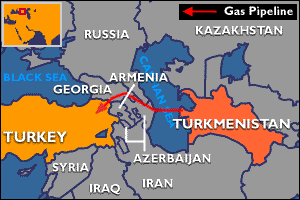
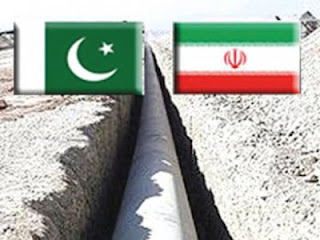
The Pakistani Federal Cabinet's final approval of the Iran-Pakistan gas pipeline construction on Wednesday is a long step towards realising an Iranian gas supply to its eastern neighbour, but not necessarily against the TAPI pipeline with Turkmen origin gas. Looking at the facts that Iran's gas trade balance is negative, its new gas extraction projects have faced long delays and also the rate of gas consumption in the country is faster than the gas production rate, it seems that buying gas from Iran is more beneficial for Pakistan. Firstly, the gas delivery was scheduled for 2015. Iranian giant South Pars gas field has five phases including 12, 15, 16, 17 and 18 and with an above 70 per cent progress would come on stream in next few years. The amount of Iran's first stage gas delivery has been set at only 7.8 bcm per year. This volume equals to one South Pars phase's production level. On the other hand the costs of construction on the Iran-Pak Pipeline (Peac...

Iran’s Gulf neighbours devour joint fields

Image
The total extraction volume of Iran's neighbours in the Persian Gulf from the joint oil and gas fields is currently nine times more than Tehran's share, the Majlis Research Centre reports. Iran shares 28 oil and gas fields with neighbouring countries, including a disputed joint oilfield with Iraq. In the Persian Gulf region, Iran has 15 joint oil and gas fields with the United Arab Emirates, Saudi Arabia, Qatar, Oman and Kuwait. United Arab Emirates extracts 136,000 bpd of oil from seven joint fields, while Iran only extracts 56,000 barrels daily. Saudi Arabia also extracts 450,000 barrels of oil from the four joint fields, while Iran's produces a daily 42,000 barrels. Iran's main problem is the giant South Pars gas field. This is the world's biggest gas field shared between Iran and Qatar with above 28 trillion cubic meters of gas reserves. Doha's gas pump currently is two times more than Iran and is extracting crude oil from this field's ...

Iran: preparing for food vs. oil sanctions

Image
Iran's economic performance for 2012 was composed of alarming indicators for Iranians. An 0.9 economic contraction, 27.4 per cent inflation rate, 14 per cent unemployment, 50 per cent decrease in oil exports which shared 87.9 per cent of the country's total exports in 2011, increasing bad loans to $60 billion and increasing liquidity to around $350 billion. Now the Iranian government headed by Mahmoud Ahmadinejad whose rule will finish in six months, has new disputed economic plans. According to a Mehr News Agency report, the government wants to issue 17 million 'food cards' for poorer citizens aimed to support them with oil, rice, sugar and probably meat and chicken. The Iranian government reportedly agreed with parliament to pay a monthly sum of between 800, 000 to 1000, 000 rials to very poor families as well. Several days ago,the government and parliament agreed to allocate $2 billion from the National Development Fund (NDF) to provide staple foods for 15 million...

Why does Iran’s national currency plunge again?

Image
Iran's national currency has dropped in value yet again by nine per cent during the past three days against the USD which is soaring from 33,700 to 39, 000 rials. According to official statistics, the dollar rate in Iran on January 23, 2012 was 21,000 indicating an 18, 000 rials difference compared to same date this year. A sharp decrease in Iran's rial value took place when western sanctions on Iran's banking and oil exports came into force in late June. However after arresting tens of dollar dealers in the open market and also establishing the Forex Centre to provide limited USD to importers several per cent cheaper than the dollar rate in the open market, the USD rate on Iran's open market decreased a little in September and the rate has been kept almost unchanged until last Sunday. Re-increasing the USD rate in Iran during the past few days has several internal and external reasons. First of all, the Iranian government had provided importers of vital p...

Iran’s demands from the P5+1

Image
An IAEA delegation group, headed by Deputy Director General of the agency Herman Nackaerts will begin its second visit in two months to Iran on Wednesday. IAEA delegation arrived in Tehran in early December 2012, but was not allowed to visit Parchin military complex where it is suspected that a nuclear-related test has been carried out. Shortly after, Iranian top officials announced several times that if Western countries recognize Iran's rights to continue uranium enrichment, Iran would allow Parchin to be inspected. Western countries don't reject Iran's right to have a peaceful nuclear program, their problem lies with worries about the program's probable military aspects. Iran's announced that preconditions for an inspection would be agreed upon at the end of negotiations (if not after), not at the beginning. Iran also is demanding the elimination of all of sanctions against the country as a precondition for an inspection of Parchin. The elimination ...

Iran’s enigmatic energy exploration in Caspian Sea

Image
Iranian media outlets have reported contradictory information about drilling the second well of a gas field in the Caspian Sea which was reportedly discovered in December 2011. The Iranian Mehr News Agency reported on September 30, 2012 that the National Iranian Oil Company announced it had begun drilling a second exploratory oil well in the Caspian Sea's deep waters, while a week after this information, head of the Iran's North Drilling Company told Shana that the submersible Amir Kabir rig was moved to another place to drill a second exploratory well in the Sardar-e Jangal gas field in a month. On the other hand, a European top diplomat anonymously told Trend on Jan.14 that "according to satellite observations, the location of this rig (Amir Kabir) has not changed from December 2011 to December 2012 and no sign of thermal activity was observed above this rig during the aforementioned period". Iran claims the Sardar-e Jangal field's discovered oil a...

Iranian dangerous fuels with 180 to 8000 ppm sulphur

Image
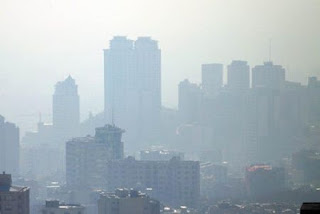
Iranian media outlets say citing some Iranian experts and officials' statements that the sulphur content in Iran-made gasoline is averaging from 180 to 1000 parts per million (ppm), while the quality of diesel offered at gas stations is even much worse than the gasoline, with its sulphur level from 7000 to 8000 ppm. The Iranian Oil Ministry had promised to improve the fuel quality to the Euro IV standard. Euro IV fuel standards permit 50 ppm of sulphur in gasoline and diesel. Iran's Mehr News Agency reported on Jan.9 that based on energy experts and a member of Tehran's Sharif University of Technology faculty staff that "the sulphur content of Iranian made gasoline and diesel is respectively 180 and 8000 ppm". On the other hand news website, Alef - linked to member of Parliament Ahmad Tavakoli reported citing on some experts and oil officials who preferred to talk anonymously, the offered gasoline and diesel in Iran contain 1000 ppm and 7000 ppm sulphu...