Posts

Iran’s crisis solution: Tax vs oil revenues

Image
Seyed Shamseddin Hosseini, Irani Minister of Economic Affairs and Finance announced that Iran is planning to fight against sanctions, imposed on Iranian oil incomes by the Western countries. He said oil revenues cut could be compensated by tax. Two days before Hosseini's statement, Oil Minister Rostam Qasemi said within his recent trip to the United Arab Emirates on Oct 23 that if the West intensifies sanctions against the Islamic Republic, the country will shut down its oil exports. Iranian Supreme Leader has called several times the government on planning a "resistance economy" in sanction conditions due to Iran's nuclear program. Hosseini says that for launching resistance economy, Iranian government incomes structure should be redefined. Oil and oil production revenues make up about a half of Iranian yearly budget, which is $5.660 trillion rials (about $449 billion based on official USD rate in Iran). According to Hosseini's statement, the share of t...

Whom Iran wants to cut off its crude?

Image
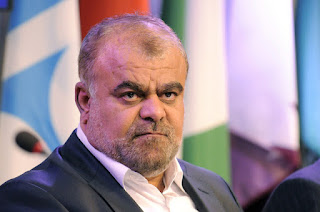
Iranian Oil Minister Rostam Qasemi announced in his recent trip to the United Arab Emirates that if the West intensifies sanctions against the Islamic Republic, the country will shut down its oil exports. The minister made the announcement on October 23, however, 24 hours after the announcement, oil prices have fluctuated slightly in international markets, meaning Qasemi's remarks had nothing to do with the oil prices. Presently, the Brent crude is sold at $108.85, which is less than the price at $110 in September. Moreover, economic growth rate among industrial countries, including China, is now less than forecasts have previously claimed. China's economic growth rate was reported to be 7.4 percent for the 12-month period, ending in September 2012, which is 0.2 percent less than the figure for the 12-month period, ending in June 2012. In fact, China is grappling with a continuously declining economic growth rate. The situation is also not so good in the U.S. and the EU. For...

Medicine crisis in Iran due to sanctions

Image
Head of Iran's Charity Foundation for Special Diseases, Fatemeh Hashemi, says providing patients suffering from special diseases with their needed medicine is facing problems due to sanctions. Iranian media reports indicate that medicine prices are rising and some types of medicine are rare due to the sanctions. "We are feeling the shortage mostly for cancer and MS drugs. Of course, thalassemia and dialysis patients are also facing hardships. These all are rooted in problems which have been caused by sanctions against the banking sector and difficulties transferring foreign currency," the Tabnak website quoted Hashemi as saying on Tuesday. Miss. Hashemi went on to say that, "Sanctions have targeted people. Many indications prove the claim. The most painful is the time when we see hardships for six million patients who are suffering from special diseases and their families who are grappling with the problems. In such a case, we will find out the grave impa...

Soaring auto prices in Iran

Image
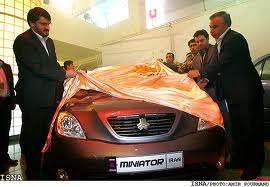
Iran Khodro and Saipa have respectively raised the price of their products by 10 per cent and 18-20 per cent on average. According to the Mehr News Agency, the organisation for supporting consumers and producers has issued permission to increase the prices of Iran Khodro and Saipa products. Based on this permission, Iran Khodro and Saipa are allowed respectively to raise the aforementioned prices. On August 28, the vice chairman of the Majlis industry committee, Aziz Akbarian, told Mehr that the two car manufacturers were laying off their workforce due to heavy debts to hundreds of parts-making companies. According to him, the Money and Credit Council is planning to pay each of the two companies five trillion rials (some 400 million) in loans in order to prevent from sacking two million labourers. The price of products of the two Iranian giant carmakers grew to the extent that the Peugeot 207i, for example, was sold at 380 million rials (around $31,000) in Tehran on Septe...

My interview with U.S. Secretary Department's Persian language spokesperson Alan Eyre

Image
The collapse of Iran's national currency in value has been caused by the Iranian government's mismanagement of the economy, U.S. Secretary Department's Persian language spokesperson Alan Eyre told  Trend  in an interview on Oct.6. The USD rate in Iran suddenly increased from late September by 80 per cent compared to Iran's national currency the rial in the country's open market. This collapse in the rial's value caused the closure of the Forex exchanges, markets and people are protesting in Tehran. Adviser to Iran's supreme leader Ayatollah Ali Khamenei Gholamhossein Haddad Adel referred to the collapse as a 'conspiracy of enemies', saying Iran will defeat it strongly on Friday. After protests and demonstrations against the falling rial value, police clashed them and arrested dozens of currency speculators spoken of as 'market disrupters' on Wednesday. A day before the protests, Iranian President Mahmoud Ahmadinejad said during ...

Wheat crisis in Iran

Image
It seems that Iran's economic problems are going to be widened day to day. After falling the country's oil export by more than 50 percent, increasing USD rate from 13, 000 rials in the beginning of current year to 3620 rials on Oct.3, the obstacles occurred in transaction of exported oil and non-oil commodities' revenues into country. Now Hadi Ghavami, parliamentary Plan and Budget Committee member says that Iran imported much more than a half of its annual wheat from abroad. Wheat issue is very sensitive for Iran with 75.2 million people. Fars News Agency quoted Ghavami on Oct.2, saying that Iran imported 7 million tons of its 12 million annual wheat demands during last 6 months (Iranian solar year begins in March 20). Iran had reached self-confidence in wheat sphere several years ago. Iranian media outlets reported in June, which is the harvesting period of wheat in Iran, that farmers prefer to sell their harvested wheat to the private sector that pays more fo...

Iranian citizens lost 660 trillion rials assets on Monday

Image
The amount of liquidity in Iran has been announced officially at four thousand trillion rials. On Monday morning each American dollar sold at 29,700 rials and then reached 35, 500 rials in the evening, indicating a 16.5 per cent drop in the national currency's value versus the USD. Regarding the amount of liquidity, namely citizens' cash assets in the country, Iranians lost 660 trillion rials between the morning and evening on Oct.1. The Forex price fluctuation in Iran last occurred more than three decades ago after the Islamic Revolution occurred in 1979. Since then, the inflation rate in Iran has usually been above 10 per cent and Iran's rial value has decreased year-on-year versus the USD. However, slowly. Iranian government during the past 33 years has kept the rial value artificially up by injecting billions of dollars from exported oil crude revenues to the country's economic vessels, but during last 18 months rial value drop has accelerated. A USD in ...