Posts

Crude Oil and condensates missed in Iran’s trade statistics

Iranian Customs Administration director Abbas Memarnejad announced that Iran exported $41.5 billion worth of non-oil goods, while it imported $53.3 billion worth of non-oil goods during the past Iranian calendar year, which ended on March 20. The Fars News Agency quoted Memarnejad as saying on Monday that non-oil imports and exports declined by 14 percent and 5 percent, respectively. According to Fars, the ratio of exports to imports in the past year fell, so that the difference between imports and exports decreased to $11.8 billion from $18 billion in its preceding year. Iran places condensates (a kind of oil with premium quality which is derived from gas wells), processed oil products such as furnace oil and diesel fuel, as well as some petrochemical products, in the list of non-oil goods, while they are regarded as oil derivatives in other countries. No official report has been released yet about the exact volume of exported Iranian crude oil and condensates in the past ye...

Fuel smuggling crisis rising in Iran

Iran which was banned from importing gasoline by the U.S. in 2009 has not solved its fuel smuggling problem yet. Before 2009 Iran relied on 40 per cent of its 72-million litres of gasoline consumption on imports, while the smuggled fuel amount from the country to abroad was about 10 million litres per day, including four million litres of gasoline and six million litres of gas-oil. After the implementation of raising fuel prices based on the subsidy reforming plan in late 2010, the amount of smuggled fuel shrank to three million litres per day, but last year rose to six million and currently is equal to 10 million litres yet again. The main reason and motivation for this huge amount of fuel smuggling is the price difference inside Iran and its neighbours. For instance, a litre of gasoline is sold at 7000 rials on Iran's open market, about 20 cents, while each auto holder gets 60 litres of gasoline per month as a quota at 4000 rials. The gas-oil price deference is even so ...

Iran’s steel import drop, prices rise sharply

Imports of steel in Iran have decreased by 44 per cent during the first 11 months of the current Iranian calendar year (March 20, 2012-February 18, 2013), while prices have increased by over 100 per cent. The giant steelmakers of the world have stopped or reduced their trade with Iran due to banking and economic sanctions which were imposed on Iran by the EU in November last year. This issue along with cutting the provision of the official rate of the dollar to domestic steel importers by the Iranian government led to a sharp rise in steel prices in the second half of the previous year, so that prices rose by over 100 per cent. On Tuesday, Reuters reported that South Korea's POSCO, which is the world's fifth largest steel producer, has cut its ties with the Iranian government and is doing limited trade just with private companies. The secretary of the Association of Iranian Steel Producers, Rasoul Khalifeh-Soltani, announced on Tuesday that imports of crude steel and pr...

Sanction-struck Iranian government eyes people’s pockets

A member of the Iranian parliament has reported that the Iranian government is insisting on increasing fuel prices by 4.5 times, aiming to gain 1250 trillion rials (about $102 billion based on current official USD rate) in revenue. The government expects expenditures of 1,200 trillion rials (about $98 billion) in the next solar year's budget bill. The bill will likely be ratified by Parliament; this figure shows an approximately 82 percent rise compared to the current year's figure. Iran's solar year will start on March 19. The Iranian government has cut a part of energy carriers' subsides since December 2010, but insists on implementing the second phase of the subsidy reform plan. The parliament has passed a bill and set the government's revenues through freeing up prices at 560 trillion rials (about $46 billion). The Ahmadinejad administration pays 450,000 rials (about $37) per capita to over 72 million Iranians, equaling $3 billion per month. According t...

Macro figures of Iran’s new budget bill

Image
New details published about Iran's upcoming solar year budget bill which was submitted to Parliament to be ratified last week, indicate elimination of some concrete figures in the bill including the price of oil and the USD rate. Iran's Finance and Economic Affairs Minister Shamseddin Hosseini said on Tuesday that the USD rate is set on the open market and the oil price on the international one. So, setting certain figures about these in budget bill is meaningless. He said that overall numbers are written in, but not set in concrete. The Iranian government solar year will start on March 20. According to the new budget bill, an income of $31 billion crude oil exports is targeted, indicating a 39.3 per cent decrease (based on USD) compared to the current solar year. With reference to this fact that the international oil price has not been predicted to change, then the amount of crude oil and condensate exports for next solar year is aimed to be about 40 per cent les...

How much is oil recovery rate in Iran?

The Iranian deputy oil minister has announced that since 2005 the country's oil reserves have increased by 110 billion barrels due to discovered new oilfields. He has added that Iran's in-situ oil reserves stand at 800 billion barrels. Mohsen Khojastehmehr told the Mehr News Agency On February 25, that the country's recoverable oil reserves are estimated to be over 157 billion barrels. Comparing the figures for proven oil reserves and the recoverable oil reserves, it will be revealed that Iran's oil recovery factor is less than 20 percent. In other words, Iran is able to extract just 20 percent of its oil reserves. Of course, the figure varies for different oilfields, but the average figure will not exceed 20 percent. According to Iran's Fifth Five-Year Economic Development Plan, the oil recovery rate should be increased by 1 percent by implementation of enhanced oil recovery methods. Based on Iranian media reports, citing oil officials, Iran is currently experime...

Iran's USD allocations for medicine imports: numbers don't add up

Image
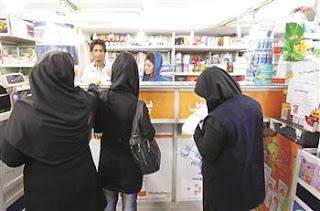
The Spokesman of Iran's Forex Center Samad Karimi said that about $3.1 billion has been allocated to medicine equipments and pharmaceutical imports during current solar year, which started on March 19, Mehr News Agency reported on Thursday. Karimi said that allocated value indicates 32 percent growth compared to last the solar year. "About $900 million through common sales and $2.2 billion through agent banks were allocated for importing medical needs," he said. He went on to say that $2.1 billion of total this value has been allocated during last 6 months. Karimi's statement came as Iranian government has been criticized due to shortage of vital drugs in the country, increasing the medicine price and avoiding to supply USD for pharmaceutical imports. Reportedly, Iran's drug shortage partly occurred because of the U.S. and EU sanctions on Iran's banking sector, which has led to cuts of payment transactions. For instance, the U.S. Commerce Department statist...